
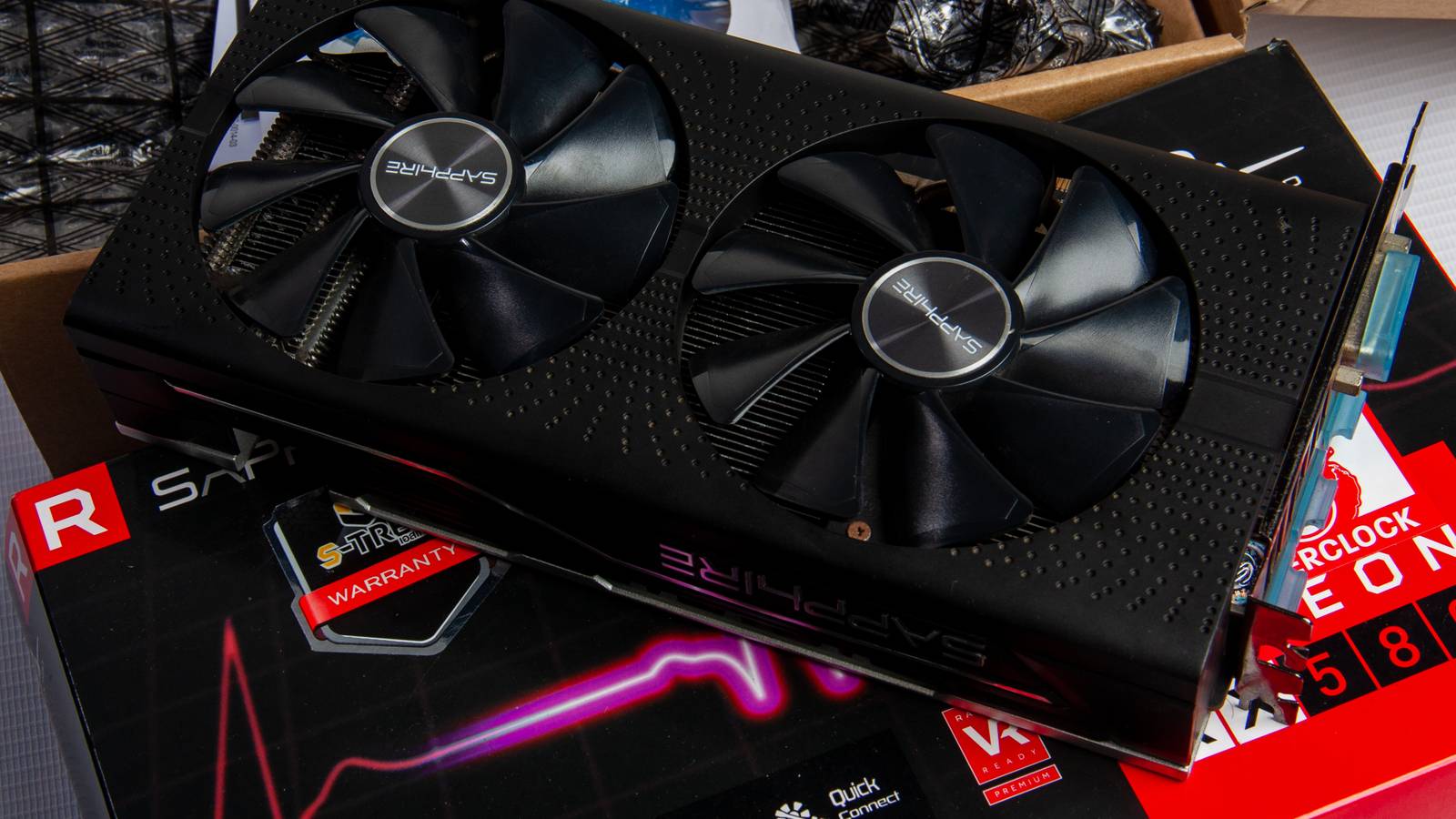
When someone tells you to buy a graphics card that launched back in April 2017 in 2026, your first instinct would likely be to laugh and scroll away. There are plenty of tips and tricks for buying GPUs on launch day, but when you’re building a budget rig, these older GPUs can really come in handy.
In this case, I’m talking about the AMD Radeon RX 580, which has somehow become the cockroach of the GPU world, refusing to die even as we’re approaching its ninth birthday. For someone scraping together a budget gaming rig in 2026, this old warhorse might still be your best bet.
The GPU that just refuses to disappear
A decade later, and it’s somehow still relevant

The RX 580 wasn’t exactly revolutionary when it launched. AMD basically took the RX 480, gave it a modest clock bump, slapped on some better power efficiency with their 14nm FinFET process, and called it a day. Within 2,304 stream processors, a base clock of 1,257 MHz (boosting to 1,340 MHz) and up to 8GB of GDDR5 memory on a 256-bit bus, it was a solid 1080p gaming card that originally retailed for $229.
Fast forward to January 2026, and you can pick up a used RX 580 8GB for anywhere between $60 to $100 on online marketplaces like eBay. It might not sound like much, but that’s an absurd value for money if you’re okay playing games at 1080p and tweaking a few settings.
How this aging card keeps embarrassing newer hardware
Efficiency, drivers, and one big underrated advantage

What makes the RX 580 special is that it’s one of the most affordable functional GPUs available right now. While Nvidia and AMD have been pushing $300+ budget cards that barely qualify as budget anymore, the used market is quietly flooding with RX 580s, creating a good balance of availability and value.
The crypto mining boom of 2017-2018 also played a weird role here. Miners bought these cards by the truckload because they were excellent Etherium miners, pulling 29 to 33 MH/s while being relatively affordable. When crypto crashed, the secondhand market got flooded with used cards. Yes, some of them were quite beat up from mining round the clock, but many were well-maintained and are still kicking today.
The result? An entire generation of budget gamers now has access to 8GB of VRAM and respectable 1080p performance for the price of a couple of pizzas.
What performance actually looks like in 2026
Modern games, real settings, and realistic expectations

As good a value for money card as the RX 580 is, it’s not going to be running Cyberpunk 2077 at ultra settings. You will have to manage your expectations and in-game settings to get the best results.
In any case, you can expect 35 to 40 FPS at low settings on 1080p in demanding 2026 titles. Modern upscaling tech like FSR (FidelityFX Super Resolution) might save the day, though.
While AMD officially moved the RX 580 to legacy driver support in 2024, the card still supports FSR upscaling in games that have it built in. Set FSR to performance or quality modes, and you’ll suddenly see much better performance in games that would otherwise be unplayable.

The critical point for performance is buying the 8GB version. The 4GB model exists, but modern games are increasingly demanding more VRAM. The 8GB variant not only has more memory but also features higher memory bandwidth, giving you a meaningful performance boost and better longevity.
Games like Red Dead Redemption 2 or God of War Ragnarok will absolutely choke on 4GB of VRAM, suffering from stuttering or frame drops. The 8GB model handles it far more gracefully.
There are alternatives—but they’re not slam dunks
Where newer budget GPUs win, and where they quietly lose
At the $60 to $100 price point where the RX 580 sells, there isn’t much competition, but there are still some cards kicking around. The obvious competitor is the GTX 1060 6GB. While it runs cooler thanks to its 120W TDP versus 185W for the RX 580, it’s also going to perform slower. That extra 2GB of VRAM that the RX 580 comes with also comes in handy for modern titles.

Graphics Cards TDP vs. TGP: What’s the Difference?
These two terms are similar but measure slightly different things. Here’s how you tell the difference.
The newer GTX 1650 costs more used and also has less VRAM at only 4GB. You could spend more money and pick up a used RTX 3050, but under $70, there aren’t enough options that offer the same combination of 8GB VRAM, respectable performance, and wide availability.
The trade-offs you need to understand
Power draw, missing features, and long-term support risks

Nothing is perfect, and that includes the RX 580 as well. The 185W TDP is thirsty by modern standards, and you’ll need at least a 500 to 550W power supply to run it safely. The card also runs hot, so be sure to pick up a good aftermarket cooling solution and ensure there’s plenty of airflow in your case.
On the software side, driver support has been moved to AMD’s legacy track, meaning you won’t get game-specific optimizations for new titles anymore. The drivers still work fine, but don’t expect miracles with day-one game releases. AMD’s software is also not as reliable as Nvidia’s, and you might regret picking AMD over Nvidia for your GPU.
And then there’s the risk of buying a used card. As mentioned before, a lot of these cards lived hard lives in mining rigs. There’s a chance that your specific card might not perform as well as expected or has been burned out by years of abuse.
The RX 580 still holds its own
If you’re spending less, it’s still hard to beat
The RX 580 might just be the best budget GPU you can buy in 2026 for the price. However, I wouldn’t recommend buying it as a permanent part of your rig. It’s more the bridge card that gets you gaming while you save up for a better, more capable GPU.

The most value-retaining GPU after 5 years — and who it beats
These GPUs still pack a serious punch.
If you’re content with 1080p and don’t mind tweaking your settings to get the FPS right, this card still has a couple of years’ worth of value left in it. For $60 to 70, that’s a pretty good deal. Just make sure that you’re picking up the 8GB variant, and ensure the card hasn’t been run down in a mining rig.
