

- Digital PR places brands on sites and platforms where most Americans actually consume information.
- Digital PR–driven rankings and brand mentions correlate with AI citations and AI-generated answers.
- High-authority publisher links and brand mentions secured through digital PR likely influence AI.
- The traditional throughline of digital PR to rankings and blue-link SEO may matter less, since most searches result in no clicks.
Yes, you still need digital PR, but the times, they are a-changin’.
The BuzzStream team and I talk about the value of digital PR all day.
AI has thrown a big ole’ curveball into everything we do.
It’s confusing, it’s messy, there is a lot of different data and terminology being thrown around (and often misinterpreted) on socials, and your clients and stakeholders are probably confused as well.
In this post, I’m going to lay out the good, the bad, and help clarify some of the studies and statements that I’m seeing across the web to help you understand how and why you need digital PR in 2026.
Digital PR will get your content onto news sites, which customers read
Let’s start at the top.
Despite newsrooms seeing shrinking traffic and layoffs, according to Neiman Lab, Americans still get their news from online news sites, which is exactly where digital PR plays.
According to our new study, about 7% always or often get their news from AI.
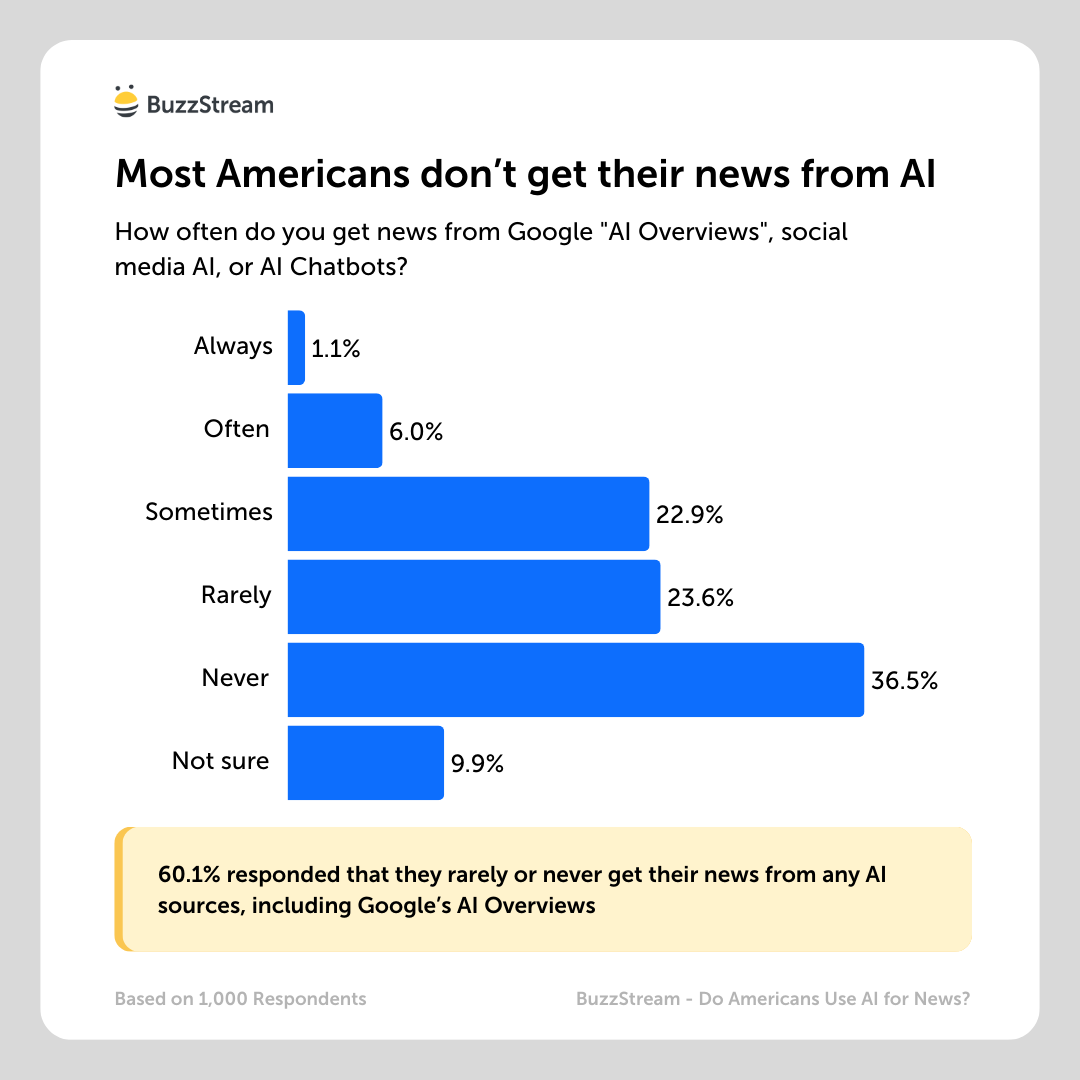
The idea of AI taking clicks from news sites is more of a concern for the news sites than a digital PR one, but I still think it’s worth mentioning because it does come up in conversations.
Securing coverage for a brand on news sites can still drive eyeballs to your campaigns.
However, a closer look at this research from Neiman Lab shows that, for the first time since 2013, social and video have overtaken TV and online news sites.
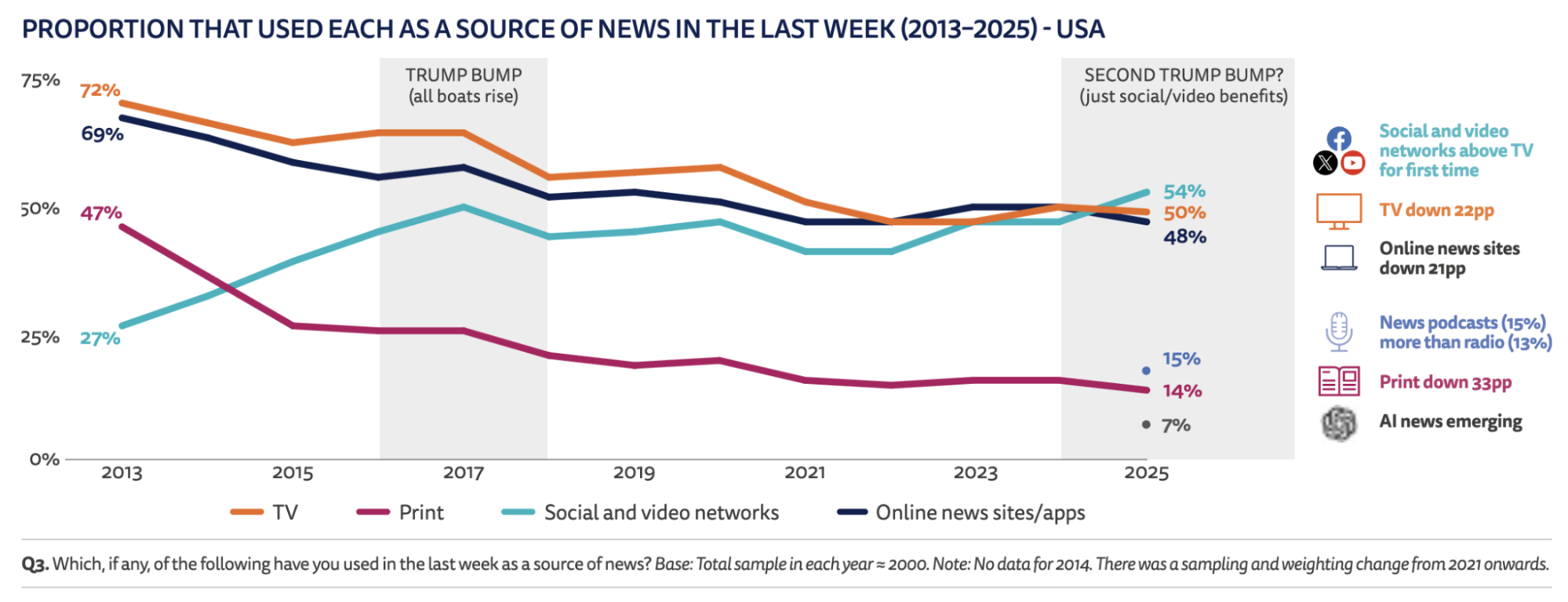
This means digital PRs will need to expand how they promote campaigns, working closely with social teams to develop content that can run across both news sites and social platforms.
Digital PR can still help you rank in the blue links, but blue links matter less
Digital PR can still help you build a site’s authority through link building, which will, in theory, help your brand rank better and increase your bottom line.
But the big question that drives much of the conversation at BuzzStream is: Does ranking for keywords matter as much as it used to?
The answer is no, probably not.
You still see correlations between keyword rankings and link acquisition, which may be enough to satisfy clients and stakeholders in the short term.
But at the end of the day, ranking for most top or mid funnel keywords means next to nothing in the traditional blue links because people aren’t clicking on them.
According to Sparktoro, about two-thirds of Google searches end without a click. (This is somewhat dated, but indicators are that it’s even more drastic now.)
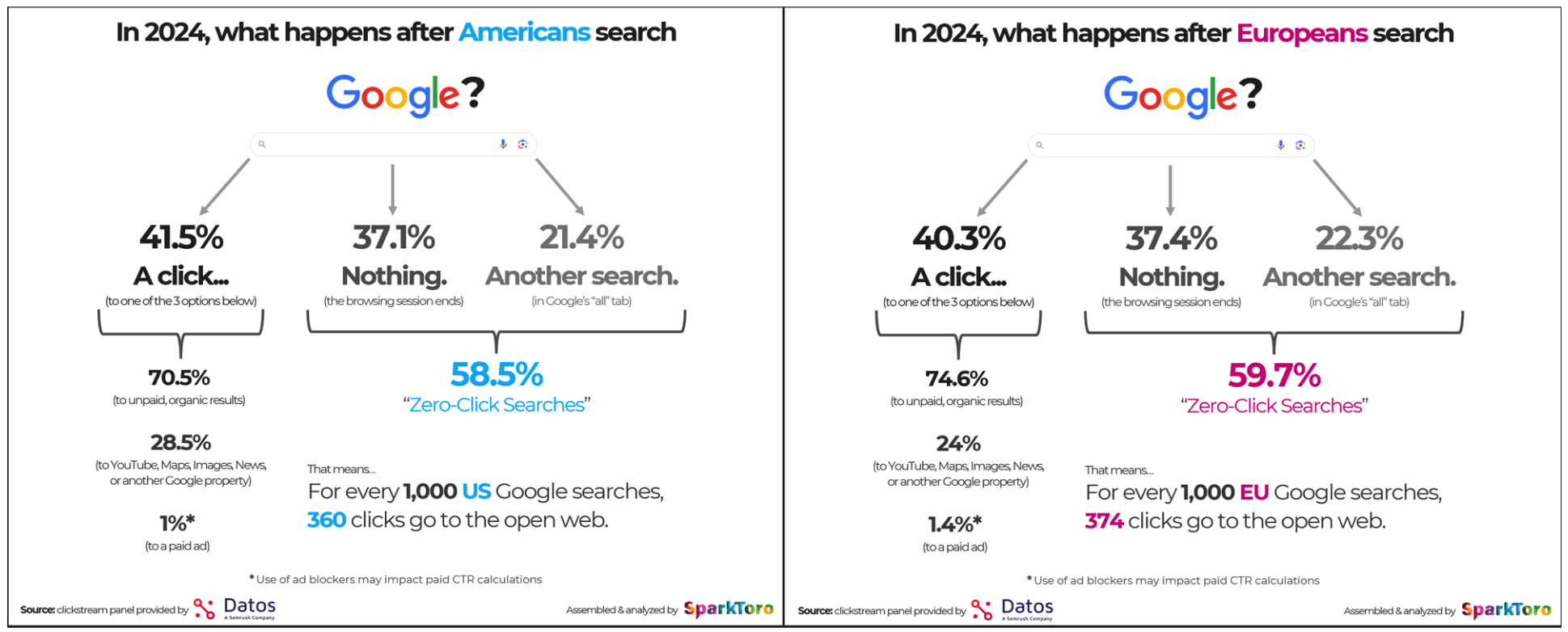
If you are focusing on anything other than getting your brand keywords, you are most likely wasting resources.
Though on the flipside, as you’ll see, ranking pages correlate with AI citations.
And that brings us to our next piece: ranking and AI.
(For the most part, I want to focus on Google’s AI products, AI Overviews, AI Mode, and Gemini, given that they have the largest market share, but I’ll share any ChatGPT data that I’ve found along the way.)
Digital PR can help you rank, which is correlated with showing up in AI citations
Being “mentioned” in AI means different things. You can get a site “mentioned” by being cited, mentioned in an answer, and incorporated into the training data.
As we know, the core purpose of getting links through digital PR is to improve rankings.
Research shows that ranking may be somewhat correlated with citation counts, though the relationship is unclear (and, in a great talk by Mike King on Sparktoro Office Hours, we still lack the right tools to truly understand much of this).
One study from SEO Clarity found that, among 1,000 queries analyzed, 81% had at least one citation from the top 20 organic results in AI Mode.
On the flip side, another study from Authoritas found that 4.5% of generative URLs directly matched a page 1 organic URL.
ZipTie is perhaps the most promising, stating, “If your website ranks #1 in Google’s traditional results (blue links), you have a 25% chance of being used as a source in AI Overviews.”
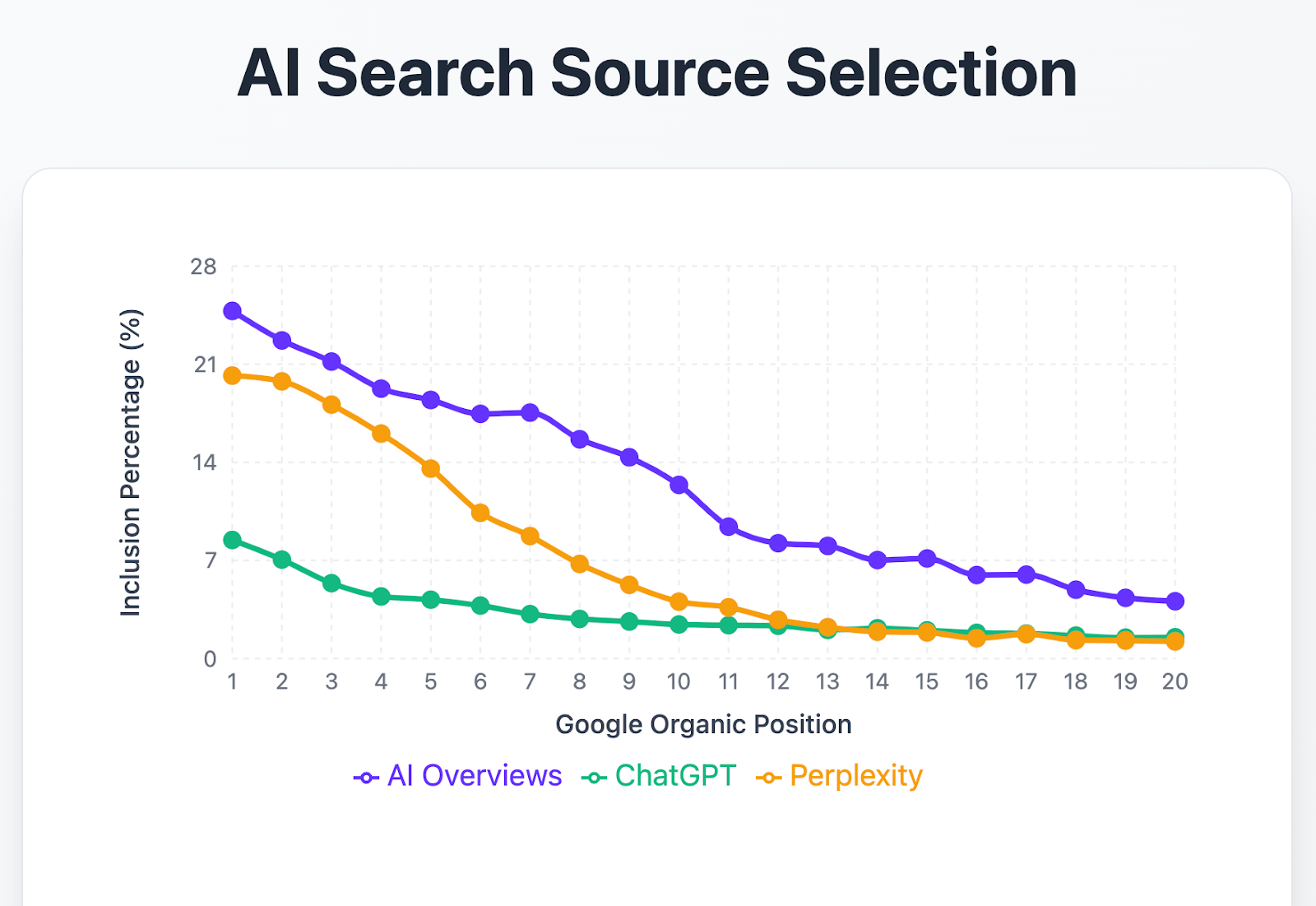
So, to me, that’s pretty much a point for digital PR.
We need to know more about how much links influence rankings today, but all evidence from the 2024 Google leak shows that it’s not just link quantity that matters; it’s link quality and relevance.
However, AI citations aren’t as important as they sound.
OK, but is getting into citations really helpful?
Let’s look at both sides.
When links are shown, according to Pew Research, just 1% click on links they find in AI summaries.
Our research found that about 1/3 of Americans click.
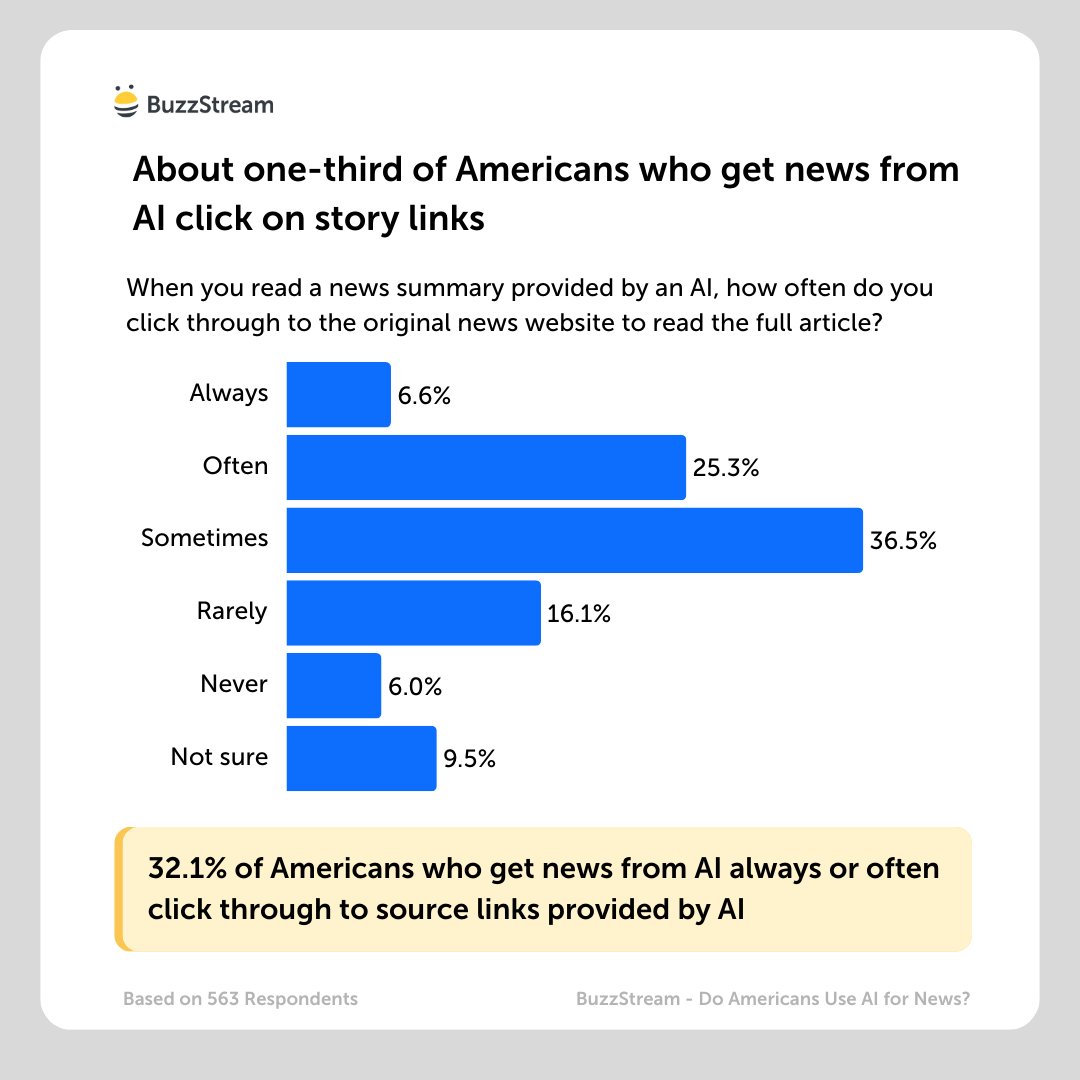
However, it appears to vary across industries and AI search results.
One study by TrustRadius found that 90% of buyers click links in AI Overviews during B2B searches.
In the grand scheme of things, it sounds like getting your brand cited in bottom funnel content is the most impactful area that you’d want to show up in citations for.
If you’re following along, we should still use digital PR to secure links to your brand’s bottom-funnel content so it ranks and appears in AI citations.
Ranking aside, let’s look at some others.
Digital PR gets you high DA news site links, which are found in AI training data
We don’t know exactly what the training data consists of across models, though some research suggests it comes from high-DA news sites.
This was outlined in a Ziff Davis research paper, which found that LLMs may prioritize data from authoritative, high-DA sites, such as The New York Times and The Washington Post.
That said, many news sites block AI crawlers from scraping their sites for training data.
Other news sites, though, have entered data partnerships with AI technologies.
This is like a half a point for digital PR because we don’t really have any correlating data yet.
Digital PR gets you links on publisher sites that have data partnerships with AI technologies
We’ve documented the many news publishers with AI partnerships, licensing their stories and content for use in AI training data.
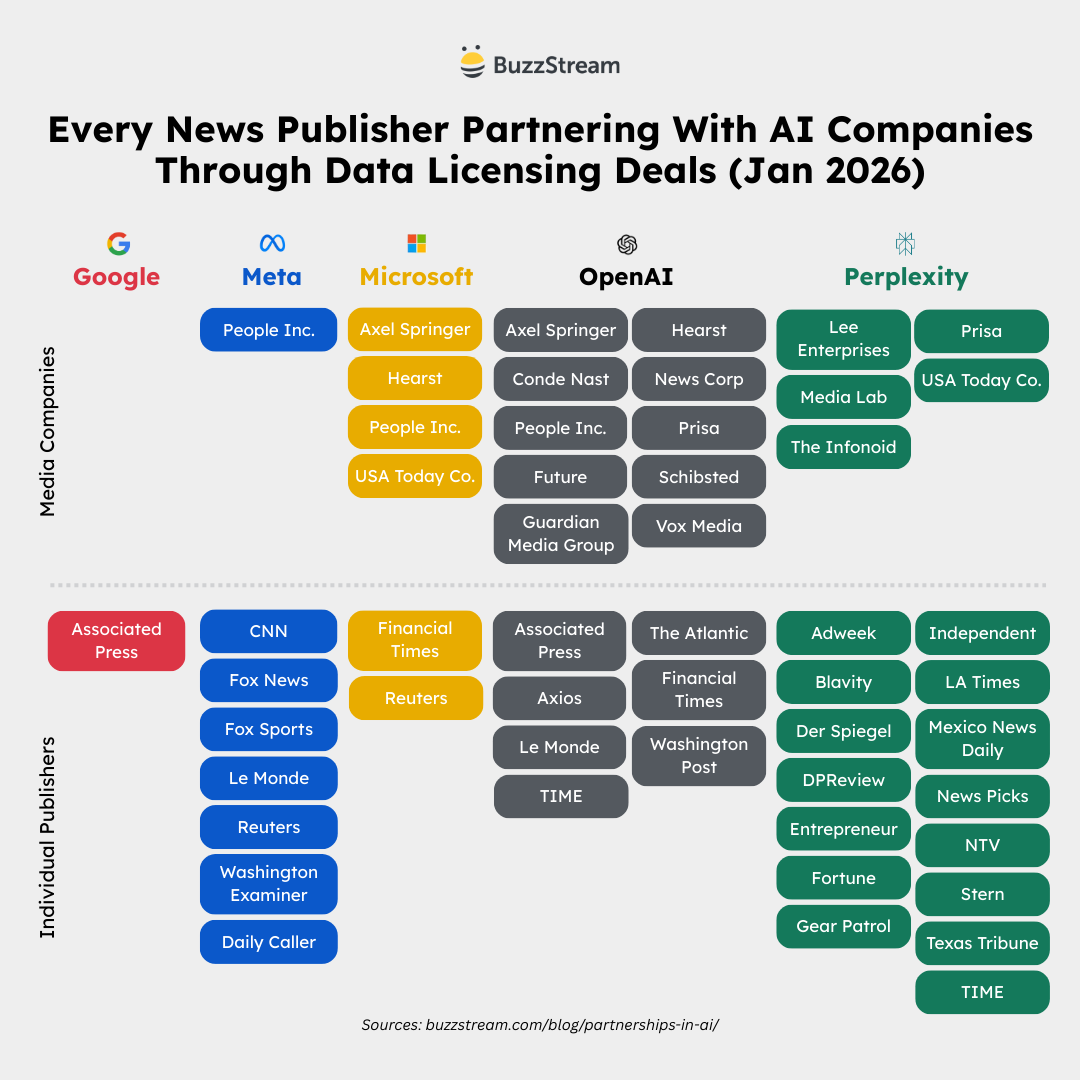
We don’t know exactly what these partnerships mean or how they work. They may be used for live retrieval or for training purposes.
Still, getting brand mentions on these high-authority news sites can increase the likelihood your brand shows up, which is a clear win for digital PR.
Digital PR can help you rank, which may correlate with appearing in AI-generated answers.
Digital PR can get your brand mentioned, which is correlated with AI mentions
According to Ahrefs, branded web mentions are the strongest predictor of being mentioned in AI answer text.
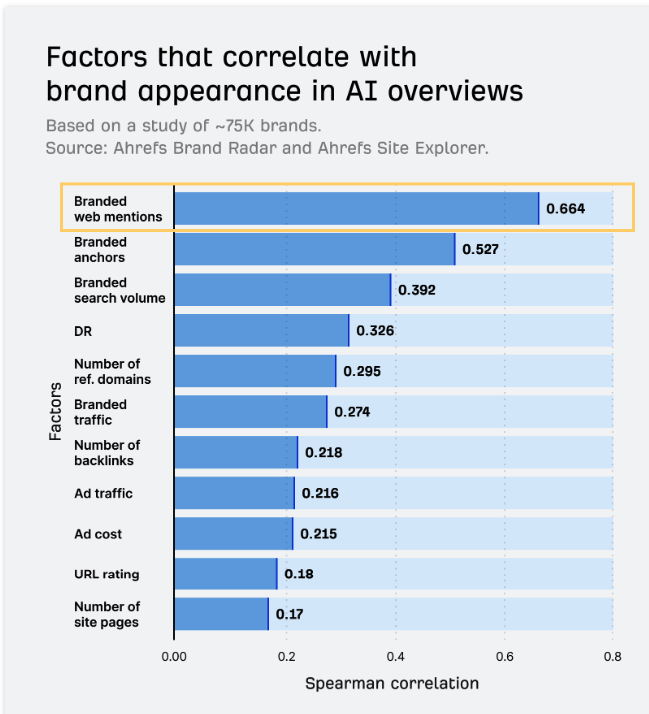
I’m talking about these mentions:
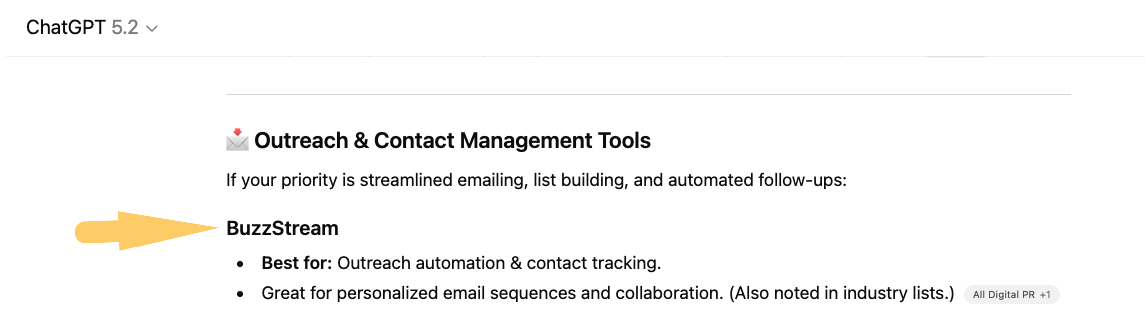
The mention of a brand, if it doesn’t have a citation, typically means it has come from the AI’s existing corpus of information, which is built from training data gathered from the web over a set time frame.
That said, AI traffic still accounts for less than 1% of referral traffic.
Keep that in mind with the next one as well.
Digital PR Strengthens Brand Entities in General
This is a high-level concept, but it is an important connection to digital PR.
Brand entities are an important factor in how AI interacts with text, and digital PR can strengthen them.
AI technology is predictive and relies on contextual information, either stored in its corpus or derived from live search (aka retrieval). (If this is confusing, check out this article from Stephen Wolfram.)
When prompted, it responds based on the statistical relationship between the current and next words.
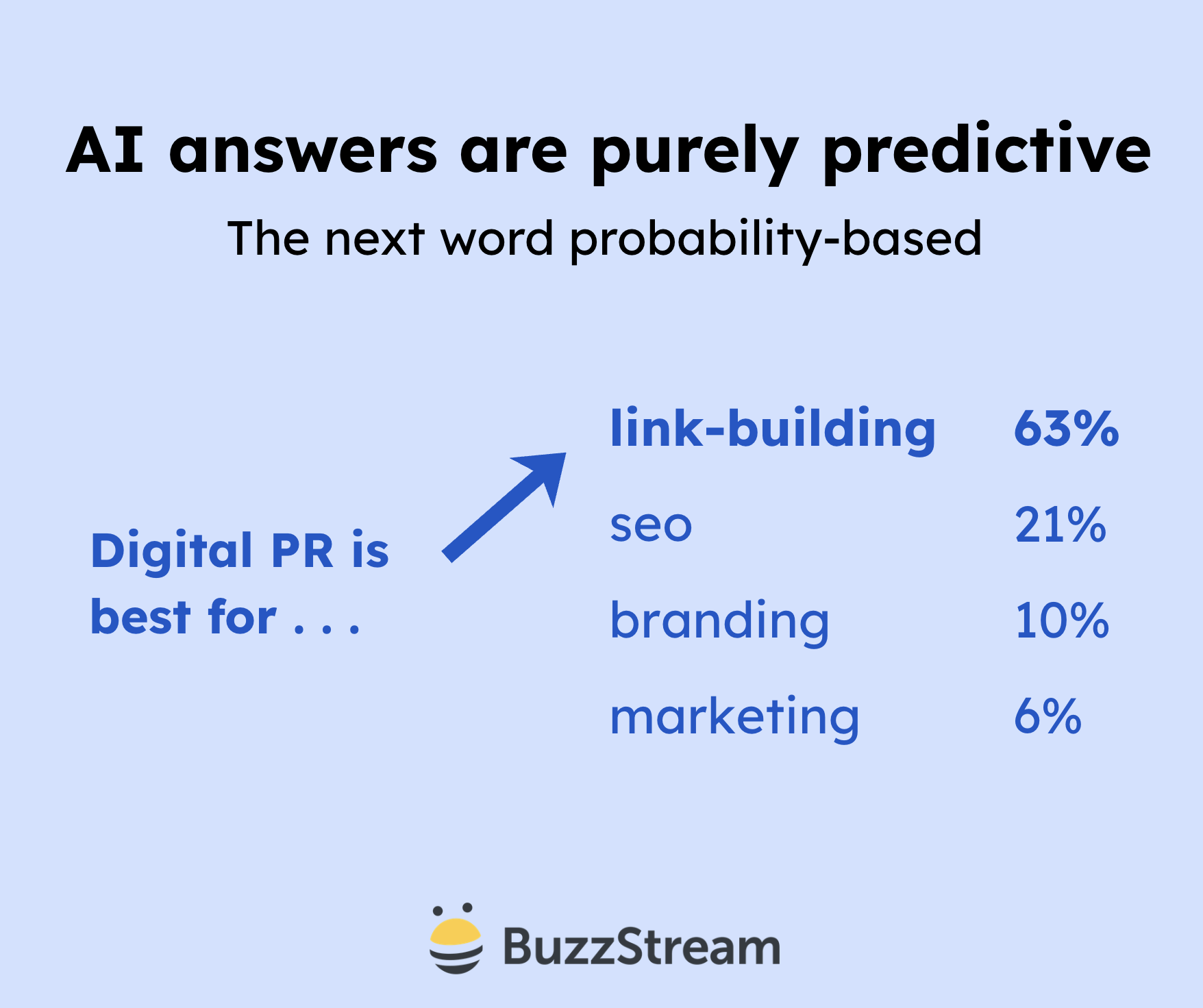
Digital PR can help strengthen your brand’s relationships with key terms.
You may need to nudge this, the key terms that make up your brand entity.
You can do this manually by asking journalists to refer to your brand in a specific way when you pitch, by including the key terms you want your brand associated with in your email body or press release boilerplate, or by doing both.
Let’s get into the “what’s changed” section of this post to understand how your mindset should shift.
Digital PR Used to be SEO first, Now it’s Brand First
Getting links used to be a numbers game, but now it’s more about strategic placements.
For a traditional PR, it is not uncommon to get one piece of coverage per month and consider it a significant win.
However, traditional PRs are likely too short-sighted, and digital PRs (myself included) are overly focused on links and coverage.
Effective digital PR in 2026 is the kind that helps associate brands with key terms, gets people talking about you, delivers unique data insights, and ultimately drives actual customers to your site.
Good luck out there!

Vince Nero
Vince is the Director of Content Marketing at Buzzstream. He thinks content marketers should solve for users, not just Google. He also loves finding creative content online.
His previous work includes content marketing agency Siege Media for six years, Homebuyer.com, and The Grit Group. Outside of work, you can catch Vince running, playing with his 2 kids, enjoying some video games, or watching Phillies baseball.
