
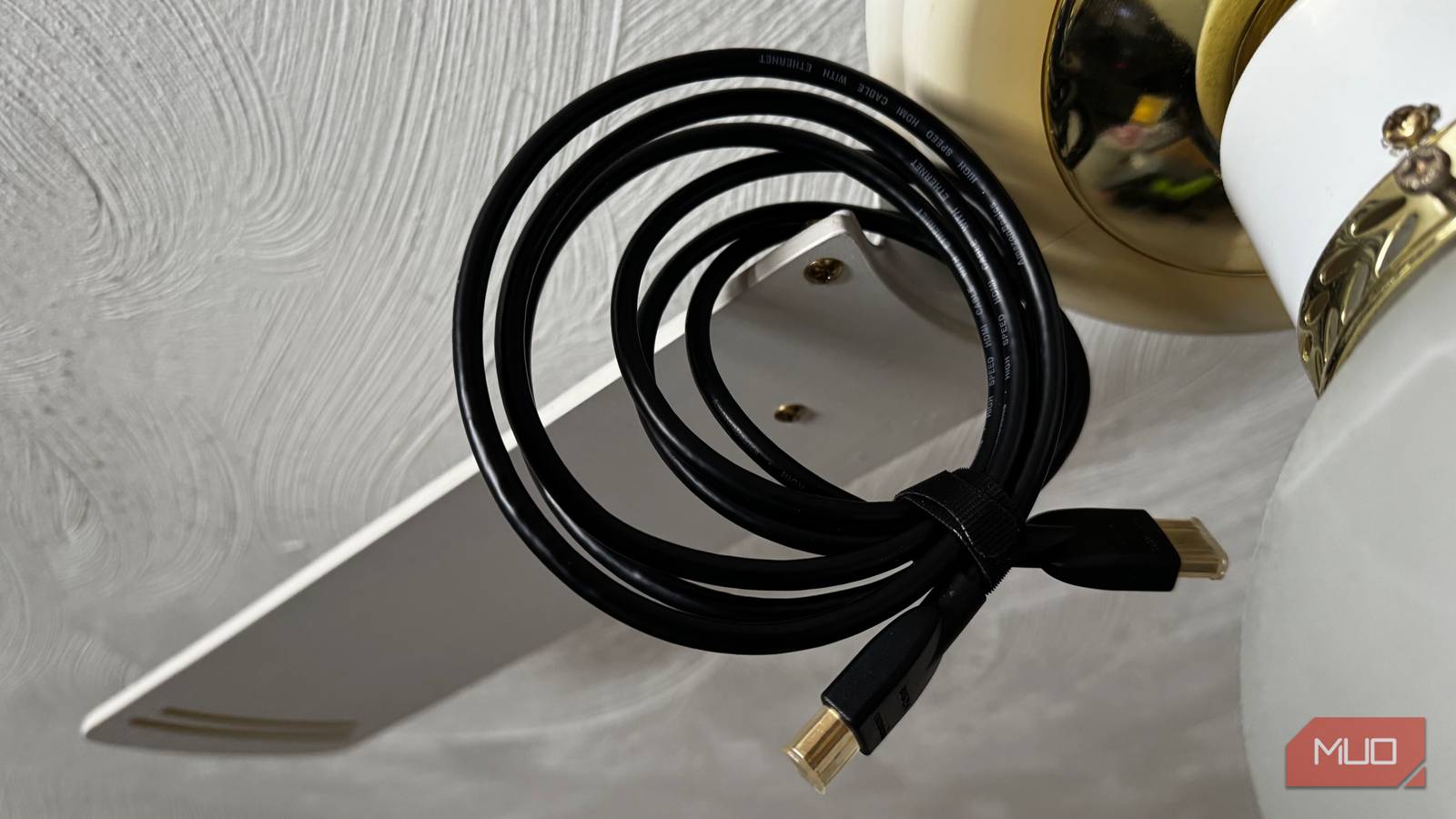
Marketers love using tech buzzwords to trick you into spending more money than necessary. And ever since HDMI has become the standard way to connect devices to TVs, companies have offered gold-plated HDMI cables that are supposedly of “superior” quality.
In reality, this practice has minimal benefits and isn’t something you should pay extra for. You don’t need an expensive HDMI cable, but you should know what to look out for when buying one since they aren’t all the same.
Why gold-plated cables offer no meaningful improvement
HDMI doesn’t need the Midas touch
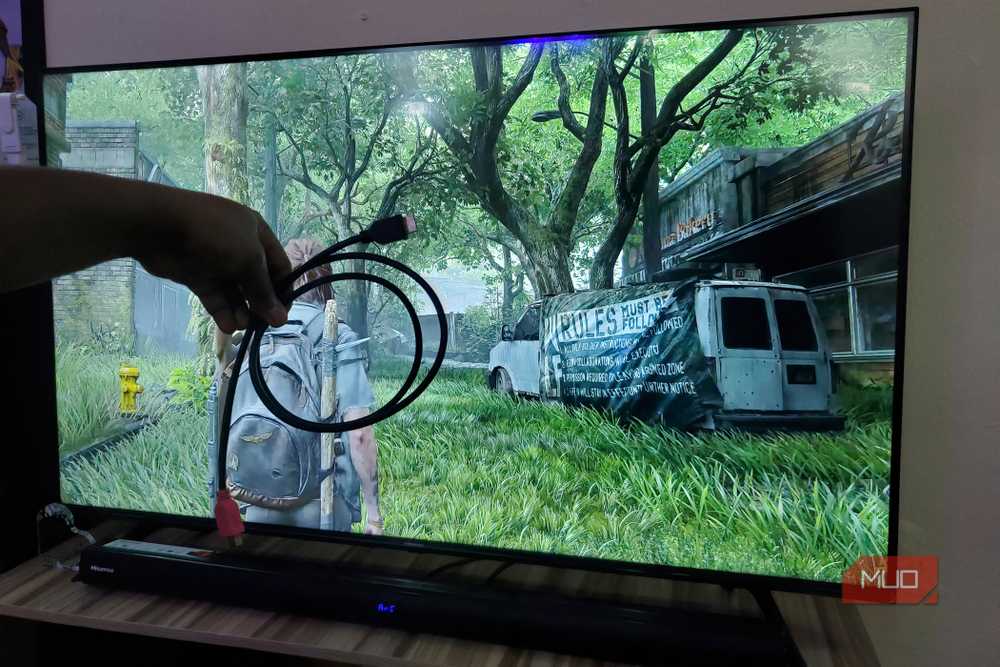
Manufacturers try to convince you that gold-plated cables are superior to ordinary ones because they carry the signal better, or are otherwise more reliable. However, this isn’t true.
HDMI is a digital connection type, so it transmits video and audio data as 1s and 0s. The information either arrives correctly or it doesn’t; you can’t “improve” the quality of what your device sends and your TV receives.

These 7 HDMI Tweaks Instantly Improve Picture and Sound on Any Smart TV
These easy HDMI adjustments will have you wondering why you didn’t try them sooner.
This is in contrast to older analog cables, like component (RCA) or VGA. Analog information is continuous and thus much more susceptible to signal interference. This is why jiggling a VGA cable fixed static, but you never have to do this for HDMI cables.
HDMI cables can still have issues, however. Aside from simply not working, the most common problem is HDMI “snow”, where the screen is covered with white flecks (as below). When this occurs, if restarting your devices and checking that the cable is properly seated doesn’t help, then replacing the HDMI cable is your best bet.
The only time gold plating would matter
Let’s get super niche

Gold-plated HDMI connectors do nothing to affect the signal, but they can slightly improve the strength of the connector itself. Gold is more resistant to oxidation and corrosion than other metals, like copper. Because of this, gold-plated cables can perform better in certain niche circumstances.
Humid environments, or those where harsh chemicals are used, are where gold-plating may have a positive effect. It may also help if you constantly remove and plug HDMI cables back into displays, as doing that can wear out the cables and ports over time.
However, these are incredibly specific scenarios that likely don’t apply to you. Unless you have a TV outside at a beach house, inside a shop where chemicals are sprayed all day, or constantly unplug a cable, you’ll see no benefit from gold-plating. Standard cables will work fine for the average lifespan of how we typically use them.
If you do unplug and re-plug your cables regularly, I recommend buying an HDMI right-angle adapter. The port on your TV is more expensive and difficult to replace than an extender or cable. By leaving the adapter permanently connected to the TV’s port, you reduce the wear on it.
What actually matters when buying HDMI cables
Even though gold plating isn’t important, there are other specs of an HDMI cable worth checking before you buy it.
A few minor bits before we get to the important points: braided cables are fine, but they aren’t far superior. They look nicer, don’t tangle as easily, and are more durable. But for a cable you’re likely to plug in and leave alone for years, that’s not a huge deal. Don’t spend extra for it.
Ignore anything about 8K output; we’re far away from 8K being a standard.
HDMI standards
Like other standards, HDMI has gone through several iterations, each with improvements. If your device and display both support the latest standard, it’s important to buy an HDMI cable that lets you enjoy it.
At the time of writing, HDMI 2.2 is technically the latest standard. It was released in June 2025, but hasn’t seen widespread adoption yet.
For practical purposes, HDMI 2.1 is the current standard. It offers a bandwidth of 48Gbps, which supports 4K signals at 120Hz or 1080p at 240+Hz. The prior generation, HDMI 2.0, caps 4K output at 60Hz. HDMI 2.0 was released in 2013, so you’re unlikely to be using cables older than this.
The HDMI licensing administration has its own terms for the generations, which adds confusion since there’s no clear pattern between them. The upcoming HDMI 2.2 is known as “Ultra96” because of the 96Gbps bandwidth. Meanwhile, HDMI 2.1 (the best currently available) is called “Ultra High Speed”. HDMI 2.0 cables are labeled as “Premium High Speed”, while “High Speed” is used for older HDMI 1.x cables.

This is a lot of confusing terms, but it’s not difficult to parse. Next time you need an HDMI cable, make sure it says “Ultra High Speed” (which should also note a bandwidth of 48Gbps). Now that you know the official terminology, you can skip over vague terms like “4K ready”.
While you can buy HDMI 2.0 “Premium High Speed” cables, there’s no reason to when the prices are so similar. Even if you don’t yet have a PS5, Xbox Series X|S, or other device that can output at 120Hz, it’s better to get a modern cable that won’t limit you in the future.
Cable length and fire ratings

The other primary HDMI cable factor to consider is its length. Most cables that come in product boxes are 6 feet, which is fine in many cases. 10 feet can give you more breathing room if you ever change your setup, though it can result in extra cable slack. It’s best to use the shortest cables you can (without them being taut) because 4K signals can start to degrade beyond 20-25 feet.
If you need a cable of this length, which is most likely when running them through the wall, you should buy an active HDMI cable. These are far more expensive, as they include signal boosters to help cover long distances without dropping out.
In case you’re running your TV cables through the wall, you must also make sure the cable meets fire standards. Check for a CL2 rating to be sure the cables have a low fire risk and would be less dangerous in the event of a fire.
HDMI cables don’t have to cost much
Save the money for upgrades that matter
Among all these standards, there’s great news: the cost of gold plating is a non-factor anyway.
This Highwings HDMI cable is $10 or under (for up to 10 feet in length), meets the current HDMI 2.1 standard, has gold-plated connectors, and features a braided cable for strength. It has HDMI “Ultra High Speed” certification, too.
Unless you’re running a cable through the wall, it will do everything you could currently need from HDMI. And if it stops working in a few years, it’s not a big deal. You could buy five of these before you match the price of the ridiculous $50+ cables available at places like Best Buy.
Get a modern HDMI cable, connect it, and then you don’t have to worry about it anymore. Don’t waste your money on unnecessary tech purchases like “special” gold plating that does nothing for 95%+ of people.
