
My three-season room is maybe 15 feet from the living room. A glass slider separates them. There are no ducts running out there, no vents, and nothing tying it to our HVAC system (besides keeping the slider open) — so it roasts in summer and turns into a freezer come January.
I’ve fixed other temperature issues in my house, and this room is the worst offender. Closing the slider just traps whatever extreme temperature has taken hold out there. I needed a way to insulate those five windows and the glass exterior door without permanent modifications — something I could put up in November and take down in April when I actually want fresh air flowing through.
The thermal nightmare of an unconditioned room
Concrete floors and glass walls don’t mix

The room is about 12 by 13 feet with a concrete slab underneath. The walls and attic are fully insulated, but it has five large double-pane windows and a full glass door. In winter, that slab just sucks heat out of the air — you can’t warm the space faster than the floor pulls it away. The windows make everything worse. Glass has basically no resistance to temperature transfer, so any warmth you manage to build up leaks straight back outside.
I’d dealt with foggy windows before, but in spaces that had vents. They had registers. They were actually connected to our heating system. This space runs entirely off-grid from our furnace and AC. Summer brings the opposite headache: afternoon sun turns it into a greenhouse while our air conditioning works overtime trying to cool the adjacent living areas through that glass slider. The windows were the obvious weak point, and I started researching ways to add an insulating layer without replacing them entirely.
Plastic film gets the job done, sort of
The classic budget approach has trade-offs

The 3M Indoor Window Insulator Kit is the go-to solution for most people dealing with drafty windows. You tape plastic sheeting around the frame, hit it with a hair dryer to shrink it taut, and the trapped air pocket provides genuine insulation. At around $10–$13 for a three-window pack, the price is hard to argue with.
I actually used this exact approach on my garage door windows earlier this winter (along with a door insulating kit), and it made a noticeable difference. The film does work. But it’s also a one-and-done solution — removing it means tearing the plastic, so you’re buying new kits every year. It looks obviously DIY, which matters less in a garage than in a living space. And here’s the real issue for my three-season room: I can’t pop out a panel on a pleasant 60-degree March afternoon and let some air in. The film stays up or comes down permanently.
I wanted something that could handle seasonal transitions without requiring fresh materials every fall.

I lowered my home heating bill by 50% with this DIY insulation kit
A DIY insulation kit and a few other items were all I needed to drastically reduce my home’s heat loss.
Magnetic panels changed my approach entirely
Magnetic mounting makes panels removable in seconds
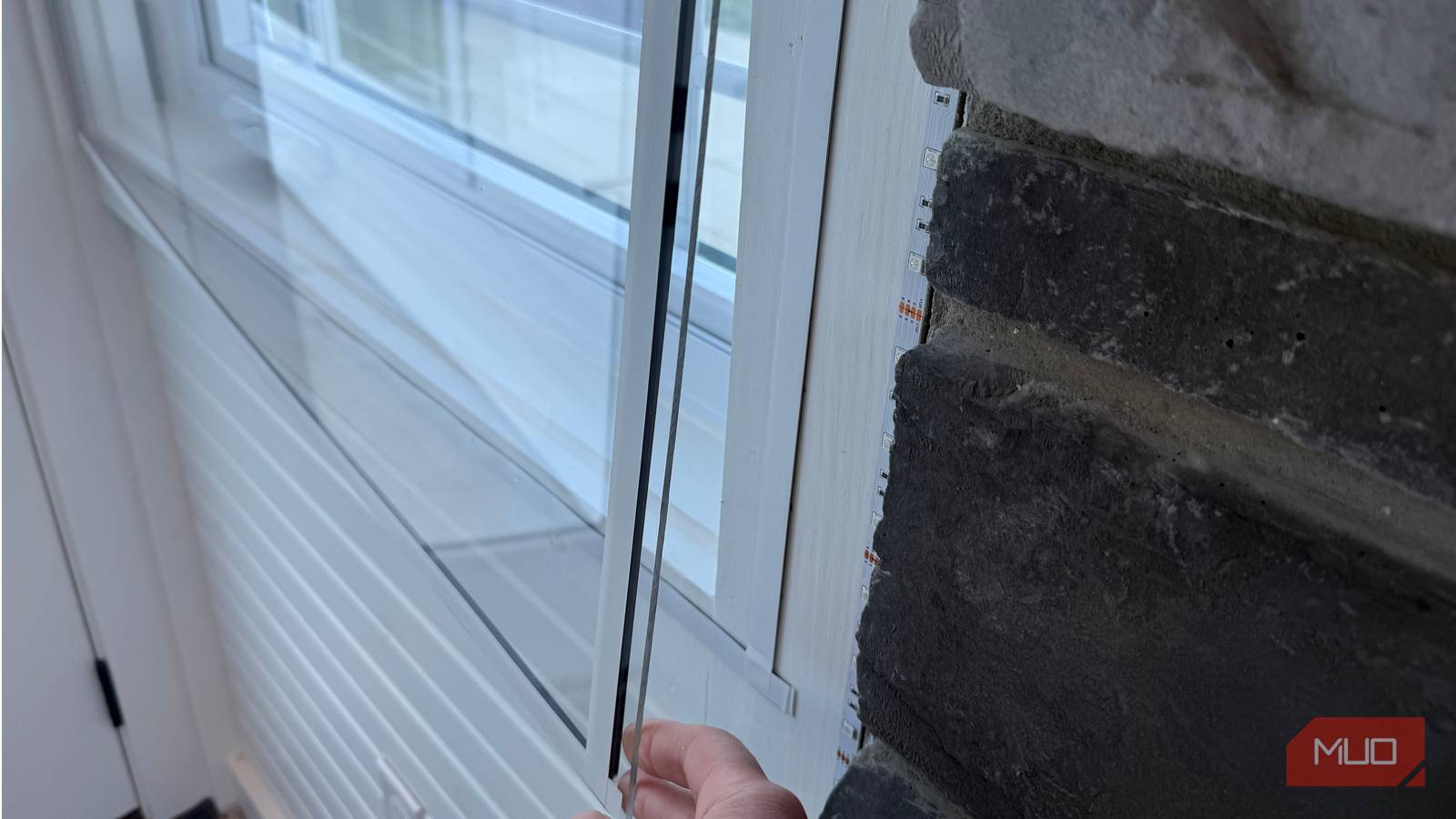
The Window Saver Kit takes a completely unique approach. You’re basically building interior storm windows that you can take down and put back up whenever you want. The acrylic panels attach with magnets. One kit gives you 100 feet of steel strip, two rolls of magnetic tape, adhesive backing, and trim — enough to cover about seven windows, depending on size.
Here’s how it works. Steel strips adhere to your window frame, creating a mounting surface. You stick magnetic strips along the edges of your plexiglass. Then you press the panel against the frame, and it grabs on — there’s a nice click when it seats. Tight enough to stop drafts, loose enough to pop off when you tug a corner.
I got my 1/8″ thick acrylic panels custom-cut from Duco Plastics. You punch in your exact measurements, and they ship the sheets ready to go. That saved me from trying to cut plexiglass myself, which never ends well. The panels showed up wrapped in protective film. I peeled it, stuck it on the magnetic strips, and mounted them.

My windows stopped fogging up after I tried these simple tricks
I stopped condensation from forming on the inside of my windows.
It took me about 20 minutes per window after I figured out the process. Getting the steel strips perfectly straight was the hard part — if they’re crooked, the panel won’t sit flat. Now I can remove any panel in about five seconds when I want ventilation, then snap it back when temperatures swing.
This solution costs real money upfront
Long-term math favors the reusable route
Let me be direct: this wasn’t a cheap project. The Window Saver Kit runs $229, and custom plexiglass panels range from $15–$250 each, depending on size. For my five windows and one door, my total investment landed somewhere over $700.
Compare that to the 3M film approach. Covering the same six openings with plastic kits would cost roughly $25–$35 per season. It’s cheaper in year one, obviously. But I’d be rebuying and reinstalling every fall, and I’d lose the ability to remove panels on mild days. After several winters, the magnetic system will pay for itself. Ten winters from now, I’ll still be using these same panels. The math gets better every year.
Plus, the view is cleaner. Shrink film always has that slight waviness to it, little distortions here and there. Plexiglass is just clear — actually, it’s clearer than glass (plexiglass transmits 92% of light versus around 90% for standard glass). Also, there’s no billowing when the furnace kicks on, and no crinkling either.
My three-season room finally lives up to its name
Winter mornings, that room used to be 15, sometimes 20 degrees colder than the rest of the house (when I left the fireplace and infrared wall heater off). Now it’s maybe 6–9 degrees off, depending on the wind, temperature, and sunlight. You can actually sit out there without a blanket wrapped around you. Our furnace isn’t fighting a losing battle against six panes of uninsulated glass anymore.
I suspect summer will show similar improvements in the other direction—less solar heat gain bleeding into our air-conditioned spaces, less strain on the system trying to compensate.
If your problem windows sit in a space you’d rather seal permanently from October through April, the 3M kits remain a perfectly solid choice at a fraction of the price.
