
If you’re like me, one of your household tasks is doing the dishes. It’s not a fun chore, but it has to get done each day to give you clean utensils and plates to eat with. After cooking a big meal, the last thing you want to have to do is clean all the dishes that you used to make the meal.
That’s why it’s nice to have a dishwasher. Loading up the dishwasher and not needing to hand wash many of the items saves you time and a bit of sanity. However, if you use your dishwasher a lot, you could be slowly ruining your utensils and kitchen tools. You may notice rust forming on your knives and other cutlery. If that’s the case, there is a quick solution to help you get rid of it and keep your kitchen items looking brand new.
How rust forms on your kitchen items
Shears, knives, forks, and spoons can all get it
If you’re seeing rust on your kitchen utensils, you’re not alone. It’s one of the most common issues that people deal with in their kitchens, and it’s quite treatable. Many utensils are made from steel. Steel is made from iron, which reacts with water and oxygen.
When water and oxygen react with iron, it creates iron oxide, also known as rust. If water remains on steel objects, over time, it can build up with rust. Rust buildup is accelerated by factors such as heat and humidity.
The most common way to build up rust on your kitchen utensils is by putting them in a working dishwasher. The heat during the drying portion of a dishwasher cycle can directly affect your utensils and other steel items.
Even if something is labeled as stainless steel, it is only rust-resistant, not rustproof. Over time, the stainless steel layer can break down and become less protective, making it more susceptible to rust.
If you’re using your steel kitchen tools with acidic foods frequently, that can also break down layers of protection. Cutting things like limes and lemons with steel knives can cause them to rust more, especially if you don’t clean them properly afterward.

5 Items You Need to Stop Storing Under the Kitchen Sink Right Now
These everyday items beneath your kitchen sink can pose a significant risk.
What to do about rust built up
Use some items that you already have

If you have rust building up on your items, you can try a few different ways to get rid of it. The easiest is using white vinegar to break down the rust.
Vinegar has acetic acid in it, which reacts with the iron oxide. When it reacts with it, it causes it to turn to iron acetate, which washes away easily and is simple to wipe away.
My kitchen knives had built up some rust from my poor cleaning habits. I too often threw them in the dishwasher to clean them, mostly out of laziness. They built up some rust, causing me to have to remedy the situation with white vinegar. While I try to keep a clean kitchen, not tending to my utensils properly is a bad trait.
What you need to do is fill a cup with vinegar that can cover the rust. As you can see from the picture above, I had rust going up to near the hilt of the knife, so I had to nearly fill up an entire glass to immerse it. The rust I had on the knives wasn’t an exorbitant amount, so I wasn’t worried about leaving the knives in the vinegar for too long. It took only about five minutes’ worth of soaking to make the rust easy to wipe away.
The more rust you have, the longer you should soak your items in vinegar. You can leave it in vinegar for up to 24 hours if you need.
After you’re done soaking in the vinegar, you can clean the rust off with warm soapy water and a non-abrasive scrubbing pad. If you’ve soaked the items long enough, you should see the rust come away. If not, you can put it back in the vinegar to soak longer.
Another option you have is creating a paste of baking soda and water, which can break down rust as well. You can apply that to the rusty areas and leave them on there for an extended period of time. Scrubbing it away with a lemon can help remove the rust as well.
What to do to prevent rust
It’s not too hard

You should never put steel items in the dishwasher. In order to protect them, you should handwash them. This means using soap and a sponge and cleaning them properly with warm to hot water.
The most important part of keeping your utensils free of rust is to immediately dry them after washing them. The way that rust builds most easily is by having water sitting on utensils with a chance to break away the protective barrier, especially on stainless steel.
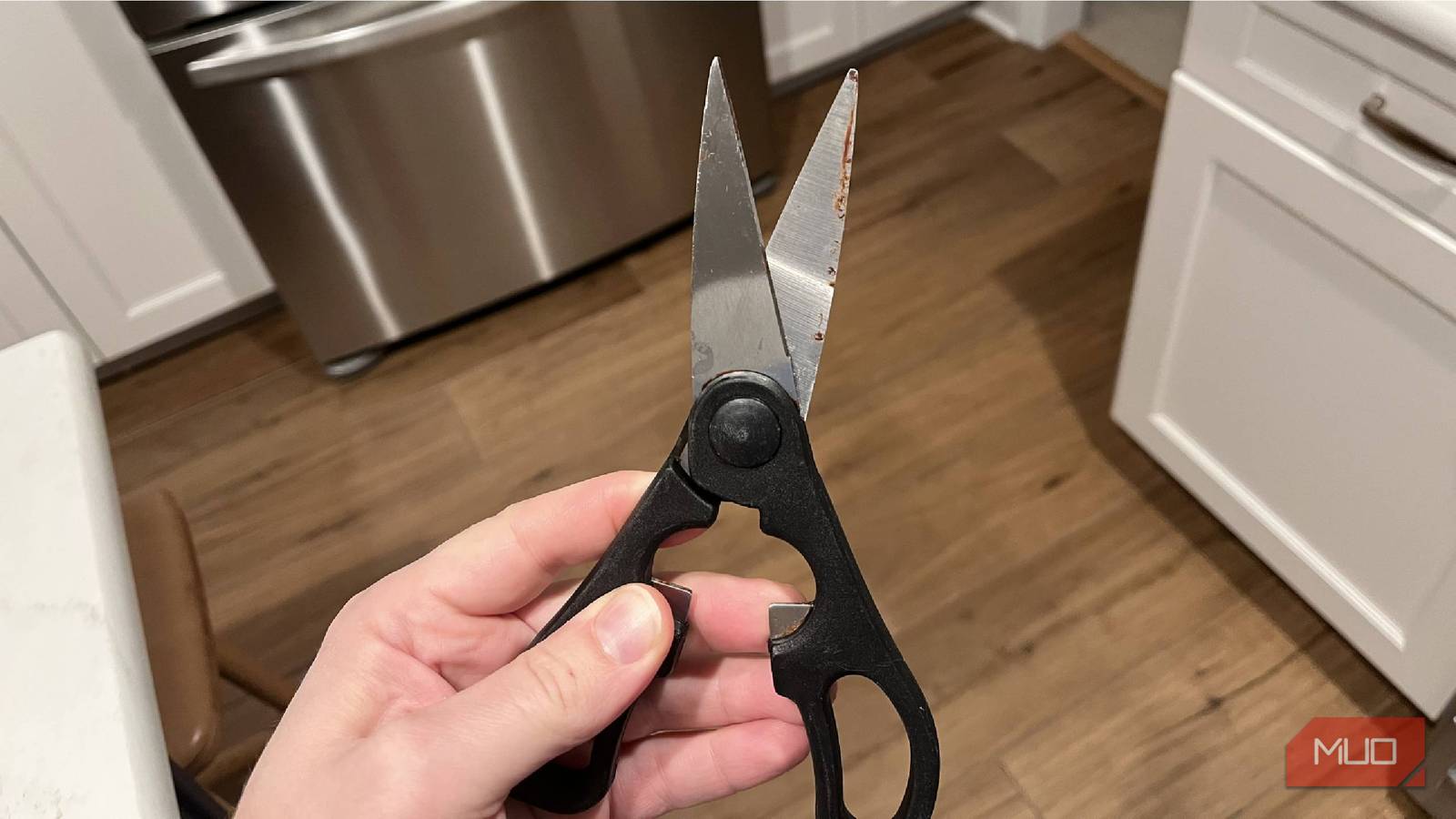
If you’re cleaning kitchen shears, you have to dry them as quickly as possible. Water can build up in the crevices of the shears, leading to rust, which is what happened to mine. I used the baking soda and water paste option on the shears, and it worked nicely because it was able to get into the crux of the scissors.
Storing your steel items in a dry place will keep them from building up moisture. This can extend their longevity as well. This is one of the smarter steps when you’re deep cleaning your kitchen and everything that is in it.
Rust is preventable and also treatable if it occurs
One of the best ways to treat rust on your utensils and other kitchen items is to soak them in vinegar and wipe it away. I tried this, and it worked well on my own items. I also used baking soda and water, and let it sit on the rust to eat away at the iron oxide. Hand washing steel utensils can prevent rust from building up, and drying them immediately after being finished helps keep them looking fresh for a longer period of time.
[ad_2]
Source link